Tuesday, June 4, 2013

This is better than you realize


This week a friend and I are writing Psalm 23 as though it were written from the Lord to us (which of course it is, but we are switching the vantage point). This is for the sake of deeper meditation and deeper personalization--to plumb more deeply what is being said and that it is being said to us.

After a few miscues with my erratic fountain pen, I was able to pen my version.

Because of the familiarity of this Psalm, I won't enter it here. You can click on the link above and it will magically open in a new window using technology, electricity and the "world wide web". 

Enjoy!

Thursday, February 14, 2013

When Do We Get Smaller?


I was listening to a wonderful episode of This American Life called Kid Logic (you should listen to it). It featured a number of stories about the unusual conclusions kids come to as they seek to make sense of life. 

For example, a little girl gets on an airplane and sits next to an older lady. The plane accelerates and begins to lift off, and the girl looks at the woman and asks, "When do we get smaller?"


She'd seen enormous planes shrink into specks as they flew away. The only explanation was that they (and all those in them) became infinitesimal. I remembered an especially infuriating conversation with my daughter on this exact subject when she insisted that the plans flying over our house were teeny. 


This whole episode made me think of the adage, 

"Kids are amazing observers and terrible interpreters." 
The incredible thing is that some of our childish conclusions follow us stubbornly and subconsciously into adulthood.

This is what psychiatrist M. Scott Peck describes as transference ("The Outdated Map"):

Transference is that set of ways of perceiving and responding to the world which is developed in childhood and which is usually entirely appropriate to the childhood environment (indeed, often life-saving) but which is inappropriately transferred into the adult environment. (The Road Less Traveled) 
I thought about this, and came up with 5 myth/reality couplings to help us distinguish between what is real and the muddled impressionistic holdovers from our childhood. Hope they shed light for you.

Monday, December 24, 2012

"Do not be afraid..." pt. 1 | A Christmas Post

The Angel Gabriel announces to Zechariah the birth of his son.


One time I was kayaking off the coast of North Carolina with my cousin. Suddenly, to the left front of our boat, something huge breached the surface of the water.

My cousin and I sat there speechless for about 10 seconds before one of us gasped, "Did you see that?"

We had happened into a school of dolphins. Every few minutes one would emerge, its back lolling up out of the water just past the breakers. It was a captivating treat.

But I'll really never forget the uneasiness I felt the initial emergence from the deep. I knew there were big things "out there", but now one such thing was right in front of me.

I can't help but feel like this was a taste of what those who encountered angels in Scripture experience. After all, the first thing the angel always says is, "Do not be afraid."

This stood out as I was reading through the nativity accounts over the past few days. There is a pattern.

I thought I might write a few (2 or 3) reflections on these instances.

It was the middle of the day during Zechariah's shift burning incense in what was probably the Most Holy Place of the temple when he had his encounter. (Luke 1:8-25)

An angel appeared, and Zechariah was "troubled"--he was agitated, uncertain. Evidently he was dumbfounded too, because the angel finally assured him:
"Do not be afraid, Zechariah, for your prayer has been heard..."
Two things stand out about this statement:

  1. The angel knew Zechariah's name, and used it.
  2. The angel knew Zechariah's circumstances, and addressed them.
Advent is, after all, the introduction of the Gospel (the good news), and this news must address us and our fears in personal ways. It is a message of assurance.

The angel knew that Zechariah must be afraid, or at least uncertain. Shouldn't we all in the Presence of God or one of his Messengers (the true translation of angel). Is there a way to definitively quiet such fears? The Gospel says, "yes!" and the advent would begin to address the question of "how?"

The Gospel is a message about who God is and what He did. The advent is the beginning glimpse--in the end you will have no need for fear, of this I assure you.

Not only that, but we are told, "your prayer has been heard."

In Zechariah's case, it was the barrenness of his wife Elizabeth. "Your prayer has been heard and your wife Elizabeth will bear you a son, and you shall call his name John."

I would argue that each of us spend most of our days in prayer: they are silent yearnings and hopes that may never even find verbal expression. They are the opposite sides of our fears, and they are always present. The Gospel addresses both our fears ("do not be afraid") and our hopes ("your prayer has been heard").

After hearing "Elizabeth will bear you a son, and you shall call his name John." Zechariah might have thought that was it, but it wasn't.
"And you will have joy and gladness, and many will rejoice at his birth, for he will be great before the Lord. And he must not drink wine or strong drink, and he will be filled with the Holy Spirit, even from his mother's womb. And he will turn many of the children of Israel to the Lord their God, and he will go before him in the spirit and power of Elijah, to turn the hearts of the fathers to the children, and the disobedient to the wisdom of the just, to make ready for the Lord a people prepared." (vv. 14-17)
 As it turns out, God had heard every ache, every groan, every hope, every longing. Yes He had heard the cry for a son, but He had also heard the cry for a Savior. And Zechariah's son John would be instrumental in his coming.

All our hopes and fears can be traced back to the fundamental, searching question: is God for me? This is really all that matters, and the Gospel emphatically answers yes.

Ask yourself, What are my fears? What are my prayers? Where do they find their root?

Hear from the angel Gabriel, "Do not be afraid, your prayer has been heard." Look back at the Gospel story in its entirety for assurance, and look forward with hope and joy! Enter into the journey of those to whom this message was first announced this advent as a way of sparking reflection and meditation.

Zechariah ended up being struck mute for his unbelief regarding this message, but is it any wonder that when his tongue was loosed he broke out into a song declaring:
"Blessed be the Lord God of Israel, for he has visited and redeemed his people  and has raised up a horn of salvation for us......that we, being delivered from the hand of our enemies, might serve him without fear, in holiness and righteousness before him all our days." (vv. 68-79)

Saturday, March 17, 2012

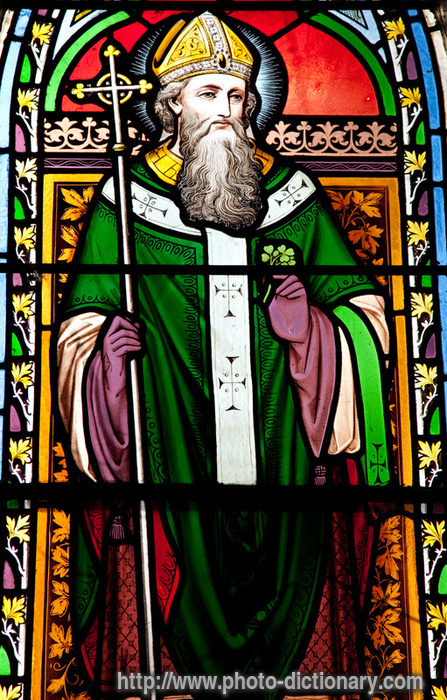
St. Patrick & the Power of Forgiveness


"I, Patrick, a sinner..."

Thus begins The Confession of St. Patrick; a story that illustrates the cosmic power of forgiveness.

Patrick wasn't Irish. He was a Welsh-Briton, who, as a "young man, almost a beardless boy ... was taken captive" by Irish raiders and sold into slavery on the harsh, barbaric Irish isle. He was only 16. This took place somewhere in the middle of the 5th century, as the Roman empire suffered its rapid decline and the so-called Dark Ages began.

For 6 years he worked against his will in Ireland before making his escape.

Through many tribulations, he made his way back home, and then did the unthinkable. He returned to Ireland! Why?

Thursday, March 8, 2012

The Profit of the Prophet


Since I follow Tim Challies on Twitter sometimes I drift into the things he is reading. Last week I was somewhat intrigued to see that one of his A La Carte topics was on the "5 Dangers of Fallible Prophecy" (posted on TheCripplegate.com). I took the bait.


I was heartened to discover that, as a budding continuationist, I am in pretty good company: Dr. Martyn Lloyd-Jones (who, from this point, I will refer to as "the doctor"), Wayne Grudem, John Piper and DA Carson (just to name a few). 


Some of you may have read the postings from my Scriptural exploration of this topic last summer. These mostly stemmed from a growing awareness on my part to the space this topic is given in Scripture, not from exposure to Christian writings or debates.


Anyhow, I made a little stink in the comment section of this committed cessationist cohort of bloggers. So much so that one of their contributors created an entirely new post to answer my objections. (If you read through the comments of the first post and compare them with the second, you'll see he is ostensibly continuing our conversation--something I invited him to do in the comment's section.)


In supporting a continuationist view on this post, I must confess that I felt a little like a voice in the wilderness! The cessionationist perspective on gifts like prophecy is that they ceased after the foundation of the church. This steps from their interpretations of Ephesians 2:20 and 1 Corinthians 13:8-10.


The argument is that the church was "built on the foundation of the apostles and prophets" and that now these roles/gifts are not needed. They argue that when Paul wrote the following words, he was describing the establishment of the church (not the second coming of Jesus):
"Love never ends. As for prophecies, they will pass away; as for tongues, they will cease; as for knowledge, it will pass away.  For we know in part and we prophesy in part, but when the perfect comes, the partial will pass away." (1 Cor. 13:8-10)
In truth--though we don't agree--they argue from a plausible perspective. However, I do think that their cessationist lens precludes them from doing a more thorough inquiry into the topic.


Here's what I mean.

Saturday, March 3, 2012

The Only Postmodern Apologetic


How are Christian apologetics like a Rube Goldberg machine? Everyone is just waiting to see if it "works". 


We live in a Postmodern age; rife with relativism and the rejection of claims of absolute truth. There's a big back story stemming from the Enlightenment and a backlash against Modernism. But suffice it to say that Postmodernism is characterized by deep skepticism toward absolute authority and truth--even based in solid reasoning. Claims to such authority or objectivity are seen through the lens of power struggle. 


We see this in our current political climate, where each side marshals out their "facts and figures". Most people know that these have been hand-picked to support their perspective, and to secure power. We see this in the Scientific community as more and more researchers are exposed for falsifying their research in order to gain grant money or prestige. 


People are jaded for a reason. It leads to pandemic skepticism and cynicism. This is our culture!


Many (most?) apologetic camps are loath to accept this. They still attack the problem as though brute reason and argumentation can win the day. (The exception may be the Presuppositional Camp.) In the end, they find themselves licking their wounds and bemoaning the fact that relativism has rendered their arsenal harmless. Rather than accept the reality of the current culture they end up pining for a bygone era--or wishing the Postmodernism could just go away so that we could get on with proving Christianity!


Broad brush strokes. I know! But a lot of us have been there.


Just the other day I was decompressing after a Bible discussion where relativism reared its ugly head. Now I'm not saying that such classical apologetics are of no use. People do need to know that their faith has sound philosophical, historical and scientific foundations. Nevertheless, we need to ask, "Is what we're doing 'working.'?"


The irony is that I think Jesus likes Postmodernism; maybe even relativism. 


Here's what I mean.

Thursday, February 16, 2012

Management or Ministry: Part 2

Jesus Washing the Feet of His Disciples / Michal Splho


The word minister comes from the latin word ... you guessed it minister, the meaning of which is "servant". It's root word is actually minus or "less".


The international community tends to utilize this term more broadly: prime minister or the ministry of education, etc. Whereas in the US, we've pigeon holed the term in the religious realm.


The term management comes from the root word manus or hand. In other word, one who "manages" is defined by some type of control.


The terms have lost a bit of their original thrust. Even so, their origins represent a fundamental difference between the ideas of ministry and management. To some degree we have probably embraced the essence of one. The question is which.


In my previous post on the subject, I discussed some of the motives behind a managerial outlook on ministry.
"I'm not against learning nor would I deny that some methods are more effective than others. But are our ministries built on methods or consecration? Are we ministers of the gospel or managers with methods? And what outcomes should we really expect from each?"
Here I would like to mention a distinction in the mentality of each.


En route to Jerusalem, John and James approached Jesus with a request. (“Teacher, we want you to do for us whatever we ask of you.”) You may know that they asked to be seated at either side of Jesus "in his glory". There is little ambiguity behind their motives: esteem and authority.


In our day, the concept of management is understood in reference to those one is over. When we adopt a management view of ministry, we tend to refer to ourselves in terms of our authority, position and those under us. This is the way we conceive of ourselves and our role.


But what does Jesus say?
"And Jesus called them to him and said to them, 'You know that those who are considered rulers of the Gentiles lord it over them, and their great ones exercise authority over them. But it shall not be so among you. But whoever would be great among you must be your servant, and whoever would be first among you must be slave of all. For even the Son of Man came not to be served but to serve, and to give his life as a ransom for many.'” [Mark. 10:42-45]
Jesus recognized the heart behind the brothers' request, and how strong the pull of power and position could be. Do we hunger for such things as status, authority and control? Or is our ultimate posture that of a servant?


The servant views himself in light of those he serves; their needs, their well being. He views his role in reference to the needs of others.


I've come to embrace a saying that goes something like this:
We don't use our people to build the ministry, we use the ministry to build our people.
This is far easier said than done!

Sunday, February 12, 2012

At a Distance


"And Peter was following him at a distance." [Mt. 26:58]


You probably know the story. Only hours before, Jesus predicted his betrayal and that his followers would "all fall away". Peter took exception, "Though they all fall away because of you, I will never fall away." 


Infamous last words.


Of course it didn't help that Peter phrased this in reference to the others--ostensibly inferring that his devotion outstripped theirs. But let's not forget that, after Jesus reiterated his prediction, not only Peter but all the disciples vowed their fidelity.


Lets also not forget that Peter did put himself in some risk by "following him at a distance."


But therein lies the issue. Here was one who was content to be known as a close follower of Jesus--one of the three in Jesus' inner circle. When the chips were down, however, it was a different story. A story that ended in denial and bitter weeping. [Mt. 26:69-75]


And what is the application for us?


You may have heard that America is becoming a post-Christian culture (as Europe has become). You may know that the term "evangelical" is suffering from very negative associations. (As happened with "fundamentalist" before it.)


This has prompted many professing Christians to employ all manner of contrivances in order to distance themselves from such associations.


Of late we've watched several prominent Christians totter over the brink of denying historic Christianity outright.


Now my point isn't to address these specific instances. In some ways I can understand the bristle Christians experience when seeking to avoid negative caricatures at large; to evade the all-too-broad brushstrokes our society has come to depict us with.


But would we follow Jesus at a distance?

Saturday, January 21, 2012

Management or Ministry? Part 1


I've been wrestling a little with the modern management-ministry model. You know the one: minister as CEO. It's amazing that books and writing on management have basically merged with those on ministry--they've become indistinguishable from one-another!


I don't want to name names, but there is a sense that if a minister were to attend a certain conference or read a certain book THEN they might experience God's blessing.


I know that management (or leadership) can and should be viewed as a valuable skill like any other, but does our minister-manager mentality have some flaws?


It made me think about a few things.


Recall the account of Simon the Sorcerer in Acts 8. Here was a man who was accustomed to fame and notoriety (even saying of himself that "he himself was somebody great"!). When he heard the gospel he believed and began spending time with Philip.  Seeing the miracles and signs performed him, we're told Simon "was amazed." When Peter and John came to Samaria, they prayed that the new believers would receive the Holy Spirit, and they did (something I'm not going to get into here!).


Simon's yearnings for fame and notoriety got the best of him, and he offered money to Peter and John saying,
"Give me this power also, so that anyone on whom I lay my hands may receive the Holy Spirit." [v. 19]
 Peter and John rebuked him saying, 
"May your silver perish with you, because you thought you could obtain the gift of God with money! You have neither part nor lot in this matter, for your heart is not right before God." [vv. 20-21]
Essentially they said his request was vile and that he had no business viewing himself as a minister of the gospel! Why? His heart was not right before God.


Does this episode not beg some questions of our current American church and ministry culture?

Wednesday, November 9, 2011

The Church of TSA?


I was going through airport security this morning and was dealing with my usual perturbation. There must have been 20 TSA employees milling around, hectoring travelers and making endless demands; loath to offer assistance, let alone lift a finger to help.

At one point I was standing there with one shoe on (my other one had to be rescanned) and my belt in my hand trying to gather all my loose change and boarding passes, when the row of bins had a pile up at the end of the conveyor belt. They collapsed together accordion-like. A free-handed TSA employee standing across from me chirped, “Let’s try to keep the bins moving along!” 

A tempered version of the following sentiment teetered on the tip of my tongue:
Have any of you ever considered actually lifting a finger to help? Or is that too obvious? You just prefer to bark orders and demands at people whose hands are already full?
I bit said tongue and kept the sentiment to myself as I hobbled into the seating area, dragging my stuff along like a scene from The Jerk.

I took one last glance into the security area and thought, “What a miserable impression that leaves one with! Dozens of people being paid to loiter around with arms akimbo or crossed; rolling their eyes and barking orders when they could—SHOULD—be serving and helping and extending understanding!”

And it occurred to me, “This is probably how people view the church!”

Ugh.
church | ch É™r ch | n. – a bunch of people with no baggage who tell you all the rules you’re breaking and roll their eyes at your struggles, when they could—SHOULD!—give an ounce of grace; maybe even help! 
True? I hope not!

Sunday, November 6, 2011

Battlefield Earth

The above video conveys a subtle but profound message. We see everyone from everyday professionals and people in the service industry to high profile entertainers (Jimmy Kimmel) and athletes (Kobe Bryant) enmeshed in an epic battle sequence. The ad ends with a deli worker (or is it a butcher) striding like Scarface toward the camera, emptying cartridges of ammo from two 9mm to either side before dropping both pistols nonchalantly. Fire and plumes of smoke fill the background, and the subtitle appears:
"There's a soldier in all of us."
What's the message? We all have an inner soldier, who yearns to enter the battle. What's the implication? There's a video game that can sate that urge. A video game! The "Call" is to let that inner warrior play war in a virtual world--to fight a virtual battle from the safety of his or her own couch.


Does this not beg the question, "It there not a real battle in front of all of us; one which our inner soldier must fight?" I would argue the answer is yes! How can it be otherwise?

Wednesday, September 21, 2011

Familiarity

"Jesus Rejected at Nazareth" / Jeff Watkins

53And when Jesus had finished these parables, he went away from there, 54 and coming to his hometown he taught them in their synagogue, so that they were astonished, and said, "Where did this man get this wisdom and these mighty works? 55 Is not this the carpenter’s son? Is not his mother called Mary? And are not his brothers James and Joseph and Simon and Judas? 56And are not all his sisters with us? Where then did this man get all these things?" 57And they took offense at him. But Jesus said to them, "A prophet is not without honor except in his hometown and in his own household." 58And he did not do many mighty works there, because of their unbelief.
Matthew 13:53-58
 The word "familiar" comes from the same root word as "family"--the Latin famulus actually means servant. In its broadest sense it denotes "household". 


It is intriguing that those of Jesus hometown and family so readily rejected him. Jesus remarked, "a prophet is not without honor except in his hometown and in his own household."


Thus the adage, "familiarity breeds contempt" is very true.


This drips from the account above. Those of Nazareth were so utterly familiar with Jesus that they rejected him. In fact, "they took offense at him"! Here Jesus was, walking around like a big shot--like he owned the joint. They knew his beginnings. They knew his pedigree. They weren't going to stand by and get too big for his britches (or cloak, as it were). 


Familiarity bred contempt. 

Saturday, July 30, 2011

Prophecy V / How?


I'll admit that I'm running out of steam on this topic, but I wanted to end by addressing the topic of "How" because it is at this point that most people get tripped up on the topic. Also, by addressing this topic, I hope to relieve some misgivings which tend to spook those who would give consideration to the prophetic.


Discernment is paramount when it comes to prophecy. Throughout the history of the church, purported "prophets" have brought reproach upon the prophetic--indeed upon the Christian faith--by creating hysteria and misleading the masses through outlandish pronouncements.


This is unfortunate and palpably awkward. The world did not end on May 21, 2011, nor did it end in 1988 (though 1988 did mark the end of the world of glam rock!). At times the results have been outright disastrous, as in the case of David Koresh and his Branch Davidian sect.


Thursday, June 16, 2011

Prophecy IV / Why?


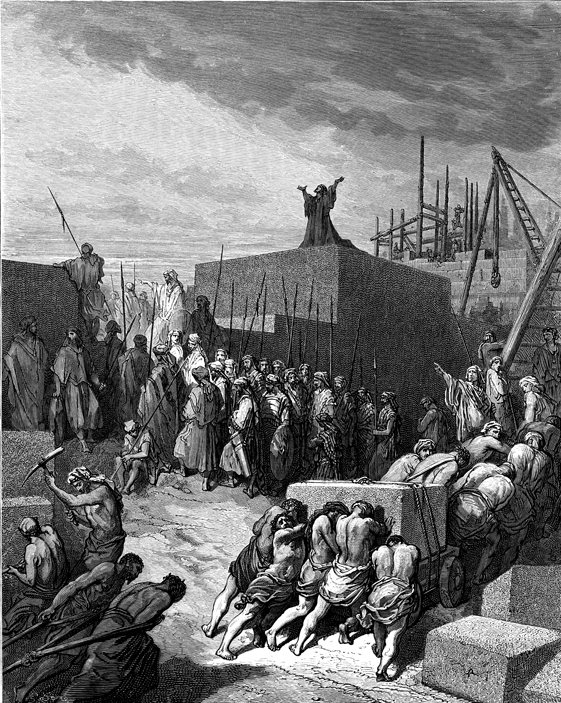
(The Rebuilding of the Temple / Gustave Dore)

When addressing the question of "Why is the prophetic important?" I feel it is important to offer the rejoinder, "Why wouldn't it be?"

When Scripture so clearly states such things as...

"...earnestly desire the spiritual gifts, especially that you may prophesy." [1 Cor. 14:]

and

"... I want you all to speak in tongues, but even more to prophesy." [1 Cor. 14:5]

and

"... Do not despise prophecies." [1 Thes. 5:20]

... it seems like it would be incumbent upon believers to answer question like, "What does this mean?" and "How do I apply this to my life?"

Let's consider Ephesians 4:11-12.

"And he gave the apostles, the prophets, the evangelists, the shepherds and teachers, to equip the saints for the work of ministry, for building up the body of Christ."

I would assume most Christians wouldn't demand an explanation of "why" regarding all of these roles of leadership in the church. (E.g. few Christians would have suspicions or misgiving about why the church needs teaching or teachers.) Since they are all commonly referenced in the NT, one would think that the basis of such confidence would simply be founded in Scripture. But why then would we ask "why" of the prophet and not of the teacher or shepherd?

I suspect this inconsistency results from one or both of the following:
  1. Lack of first hand experience with the prophetic (or confusion regarding our experiences with it)
  2. The natural equivalents of the other roles (i.e., we are more able to comprehend these other roles from a natural point of view)
Thus our receptiveness to the prophetic has more to do with our experience and natural reasoning than with the counsel of Scripture. But this shouldn't be the way Christians operate.

My first post on the prophetic was titled De-/Re-Mystifying the Prophetic. To re-mystify the prophetic, is to restore it to it's supernatural power. To de-mystify it is to restore it to it's understandable place in Christian life.

Saturday, June 11, 2011

Prophecy III / What?


(Belshazzar's Feast / Rembrandt)

In Daniel chapter 5 we find a vivid image of the prophetic; one which has become an idiomatic phrase in our own language.

King Belshazzar of Babylon had become haughty, and during a feast he had the sacred golden vessels from the Jewish temple brought to him that he and his guests might drink wine from them. Suddenly the "fingers of a human hand" appeared and wrote something on the wall, which was undecipherable for the king and any in his court.

After some time, Belshazzar's wife reminded him about Daniel, and that, in the days of Belshazzar's father, "light and understanding and wisdom like the wisdom of the gods were found in him."

Daniel comes and is able to read the writing on the wall.

What is a prophet? One who can read the writing on the wall. That is, one who comprehends and verbalizes the meaning of things before others.

Wednesday, June 8, 2011

Prophecy II / Fear of the Unknown


During the process of canonization, church father Tertullian irksomely quipped, "The Holy Spirit has been chased into a book!" (One can picture him saying just that in the above rendering!)

The broader context is this. An itinerant preacher named Montanus had been proclaiming deep levels of Christian devotion and consecration. He brought with him two supposed prophetesses named Prisca and Maximilla, whose ecstatic utterings he purported to be on par with Scripture.

Terullian supported Montanus. But as he and his companions veered further away from Orthodoxy, the church labeled the movement heretical.

I think all Christians should empathize with Tertullian's bitterness and sorrow. It was Jesus, after all, who assured us, "Nevertheless, I tell you the truth: it is to your advantage that I go away, for if I do not go away, the Helper will not come to you. But if I go, I will send him to you." [Jn. 16:9] The Presence of the Holy Spirit is said to be preferable to Jesus' own Presence, yet we've been conditioned to expect so little of Him.

Can He speak to us as individuals still? Can He speak through us still?

True the line was blurred in Tertullian's day, yet I do believe that most of our misgivings about the prophetic arise from a certain erroneous way of thinking, viz. that prophecy and Scripture are synonymous.